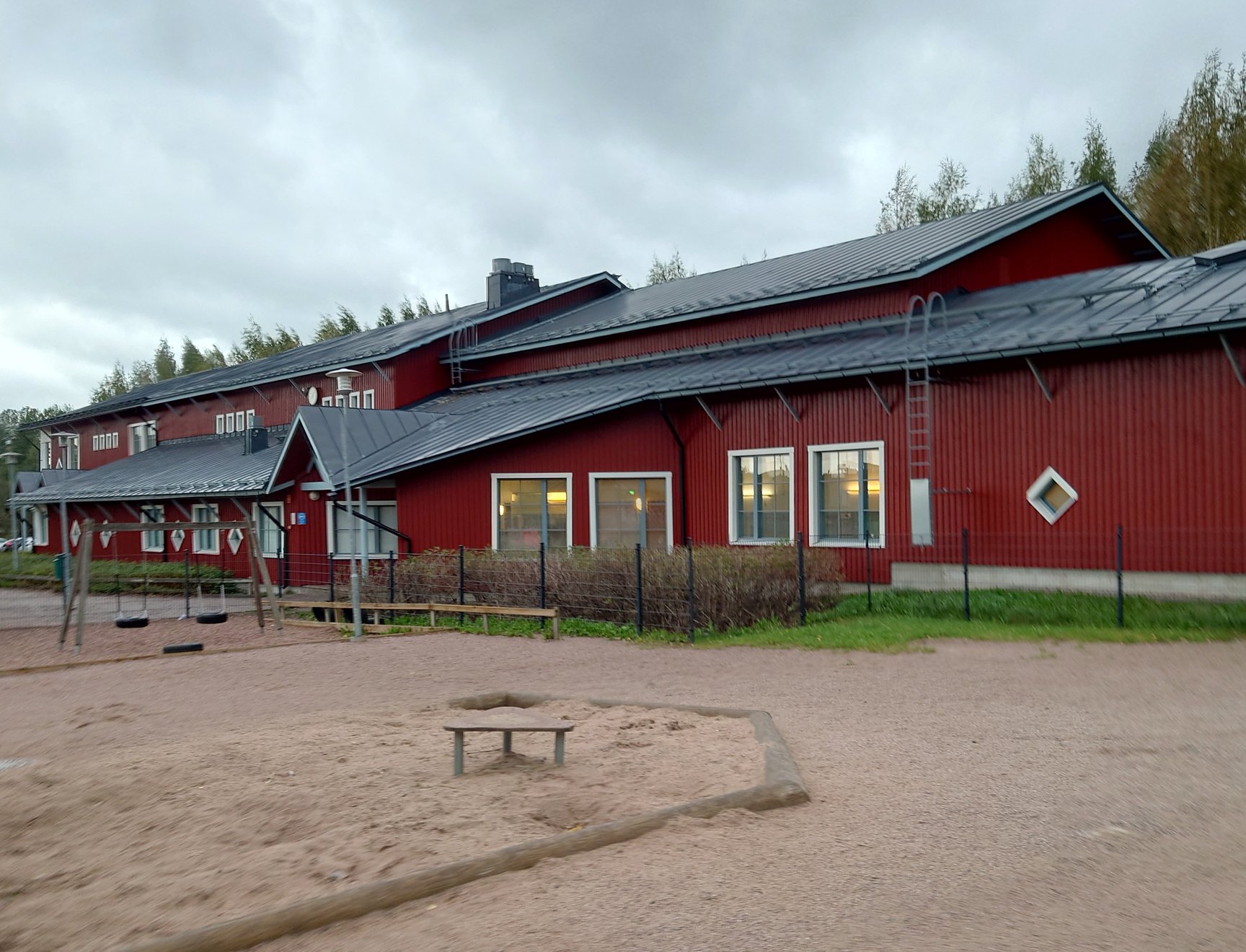
The most important topic in the municipal elections. Education. The most important and largest task of municipalities now that social welfare and health services are the responsibility of the wellbeing services counties. This Sunday we will find out what direction Finland’s municipalities will take on education. Will we correct course back towards those times when small Finland was an education superpower? Or will we continue the current trajectory, in which education is becoming accessible to fewer and fewer people?
Early childhood education is where learning begins
Opportunities for education begin to be built even in early childhood education. It is also the moment when a child first encounters education organised by the municipality. High-quality early childhood education gives children the foundations for comprehensive school, regardless of their home circumstances. It is where good living habits and social skills are taught at a time when the child is especially receptive.
Comprehensive school and upper secondary — the foundation of the education pathway
In comprehensive school, the foundation for learning is laid, from which one can progress according to one’s own potential. Learning does not happen, however, through discipline and the stick, but by giving teachers the opportunity to meet their pupils as individuals. By ensuring there is time for every child and the support they need. Credit must also be given to the government here: at least on paper, the learning support reform is a step in the right direction. At the same time, unfortunately, municipal funding has been cut, so the final outcome is still open. At the end of comprehensive school, every young person should also be given the best possible foundation for the choice of whether to continue to vocational college or upper secondary school.
Vocational education has unfortunately been the target of this government’s special treatment and has thus suffered multiple cuts. Even if our goal were to raise the level of higher education, that does not remove the need for vocational experts. Vocational college is also part of many people’s path to higher education — including mine. Municipalities can certainly try to improve vocational education from their end, but that requires decision-makers for whom education is more than ceremonial speeches.
If a young person chooses upper secondary school, they receive a general education for longer than a peer who chose vocational college. There, it is important to ensure that the young person has the foundations for the next level of education.
Why is lifelong learning a municipal responsibility?
And education does not end with higher education either — in a changing world, each of us needs to update our skills from time to time. Even though the government abolished adult education allowance. Some do this with their employer’s assistance, others at their own expense, but some end up back in the sphere of municipal services at this point, through the employment office.
So while education is one of the municipality’s most central tasks, one could equally say that the municipality is one of the most central educators.
Updated 25 June 2026. My position has not changed.
On the government’s education cuts I have written in two earlier pieces: One step forward, two steps back covers the cuts to vocational education, and Is education under special protection? is a rejoinder to the Minister of Education’s comments. All my education posts can be found in the education category and early childhood education topics in the early childhood education category.
Also published in: Kirkkonummen Sanomat, 9 April 2025.
Other posts
-
A cold harvest for Kirkkonummi — a weak budget
The government's mid-term session cut state subsidies and corporate tax. This significantly narrows the room for manoeuvre for local councils.
-
Is education under special protection?
Education is being cut deeply, despite government claims to the contrary. Index increases and legal reforms do not cover hundreds of millions in cuts.
-
One step forward, two steps back
The government is making necessary reforms to upper secondary education, but they do not compensate for €120 million cuts to vocational education.
-
The municipality must plan for the long term
Municipalities must plan for the long term. Short-sighted decisions lead to extra costs and poorer services for residents over time.