This is the eighth part of the series “Essays on immigration”. Earlier parts of the series have covered the immigration debate, the scale of immigration, family-based immigration, labour-based immigration, those who came to study, those granted asylum and asylum seekers.
The most common myths about immigration can be refuted with evidence. Last week, a representative of a governing party spoke on television about immigration in a blatantly racist and offensive way. They also made several claims about immigration, most of which are at least questionable if not outright false. Since false information tends to stick easily in people’s minds, it is worth reviewing how things actually stand.
For every asylum granted, fourteen times as many people immigrate for work.
Myth 1: Do people move to Finland in pursuit of social benefits?
The first persistent myth about immigration is that people move to Finland in pursuit of social benefits. The correct answer, however — excluding recent years’ Ukrainians — is that the majority move to join family or for work. Each year, only a fraction of those who move here to work receive asylum. Those who come to study also outnumber those granted asylum many times over. In addition, the majority of those who have been granted asylum are also in employment.
It is also worth noting that for people immigrating on the basis of family ties, if they are not Finnish, the family must have sufficient income for family reunification to be permitted. The current government has also raised these thresholds considerably.
Foreigners working in low-wage sectors have to work very hard for their income to be sufficient for family reunification.
Myth 2: Do most immigrants come from Africa or the Middle East?
The second persistent myth is that an especially large number of people move to Finland from Africa or the Middle East. In reality, however, the majority of those moving to Finland come from elsewhere in Europe or from Asia. Estonians and Russians, for example, are the largest minorities in Finland.
Myth 3: Are immigrants poorly educated?
The third persistent myth is that those moving to Finland are poorly educated or have weak skills. However, the latest statistics show that the proportion of highly educated people among immigrants is 44 per cent. The corresponding figure for the entire Finnish population is 40 per cent. And the trend is downwards. It would of course be better to attract even more highly educated people to Finland, but equally we should be educating more Finns.
Immigrants have a higher level of education than Finns.
Myth 4: Do immigrants commit a disproportionate number of crimes?
The fourth and perhaps most persistent myth is that immigrants commit a disproportionately high number of crimes. Statistics show that people of foreign background account for 15 per cent of all suspected offenders, while their share of the population is 11 per cent. There is a small over-representation, but these are still only suspects, not convicted criminals. More interesting would be to examine what other factors are over-represented in the same statistics. Poverty and social exclusion, for example, can lead to crime. In a country where merely having a foreign-sounding name makes it harder to get a job, and where you hear on the evening news that you are of inferior quality, it is understandably difficult to feel that you belong to society.
The fact remains, however, that there are a significant number of people in Finland who believe immigration involves serious problems. In response to this, a report by Jussi Pyykkönen and Osmo Soininvaara titled “The Social Contract on Immigration” was published earlier this year. The report presents a clear and fair model for how immigration could work in Finland.
Because immigration is something that the world’s fastest-ageing country needs.
Updated 25 June 2026. My position has not changed, but has developed: it is important to acknowledge honestly that diversity and the Nordic trust society can be in tension with each other. The answer to that tension is successful integration — not exclusion.
Read more about immigration: together we are stronger and everyone has the right to be proud of their existence. Read more in my posts on immigration.
Also published in: Kirkkonummen Sanomat, 3 September 2025.
Other posts
-
The flag is up. What does Kirkkonummi do next?
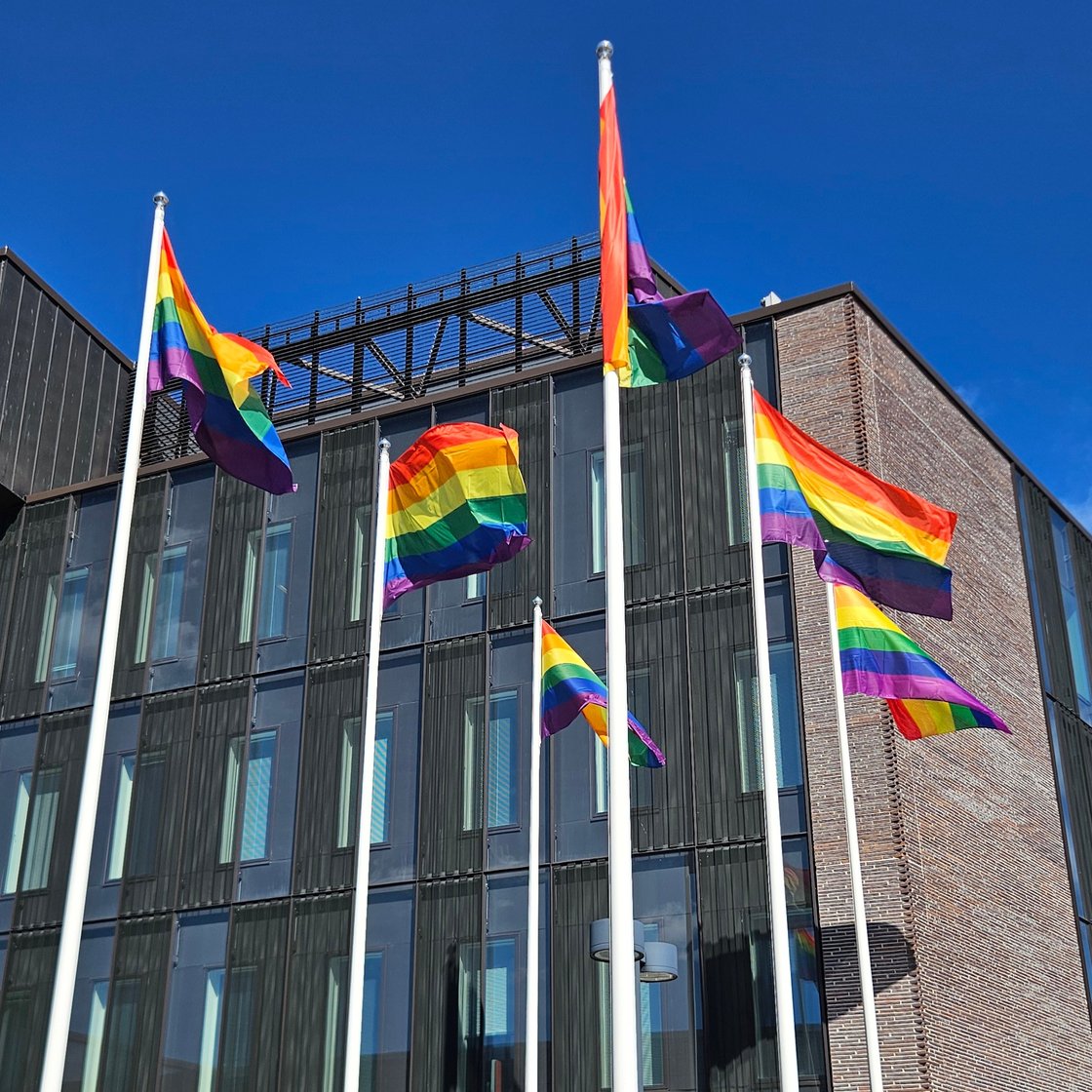
Kirkkonummi raised the Pride flag for the first time on 22 June 2026. The flag matters, but equality also demands concrete action in the autumn budget.
-
Kirkkonummi tells everyone: you belong here
Bullying of rainbow youth is increasing. Kirkkonummi voted 30–14 for flag-flying — a small gesture with measurable effects on young people's wellbeing.
-
Kirkkonummi is a more equal place today than yesterday
The municipal council of Kirkkonummi on 9.3. accepted my initiative for hoisting the Pride flag in Kirkkonummi, twice a year!
-
Everyone has the right to be proud of their existence
Pride is about everyone's right to be proud of their existence. Gender and sexual minorities still face more discrimination than others.